Inside the Assembly Bay: 100% Pre-Assembly and LED Testing on a Florida Whole-House Cabinetry Project
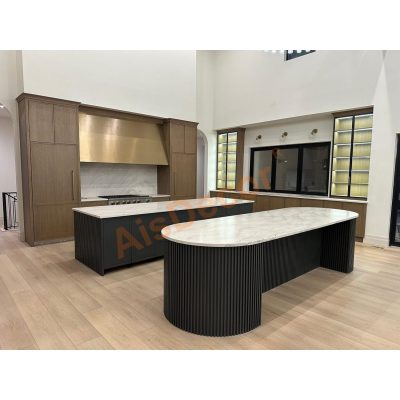
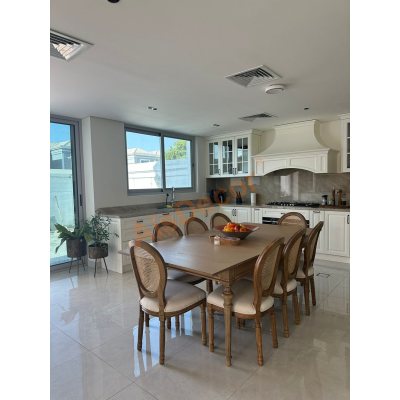
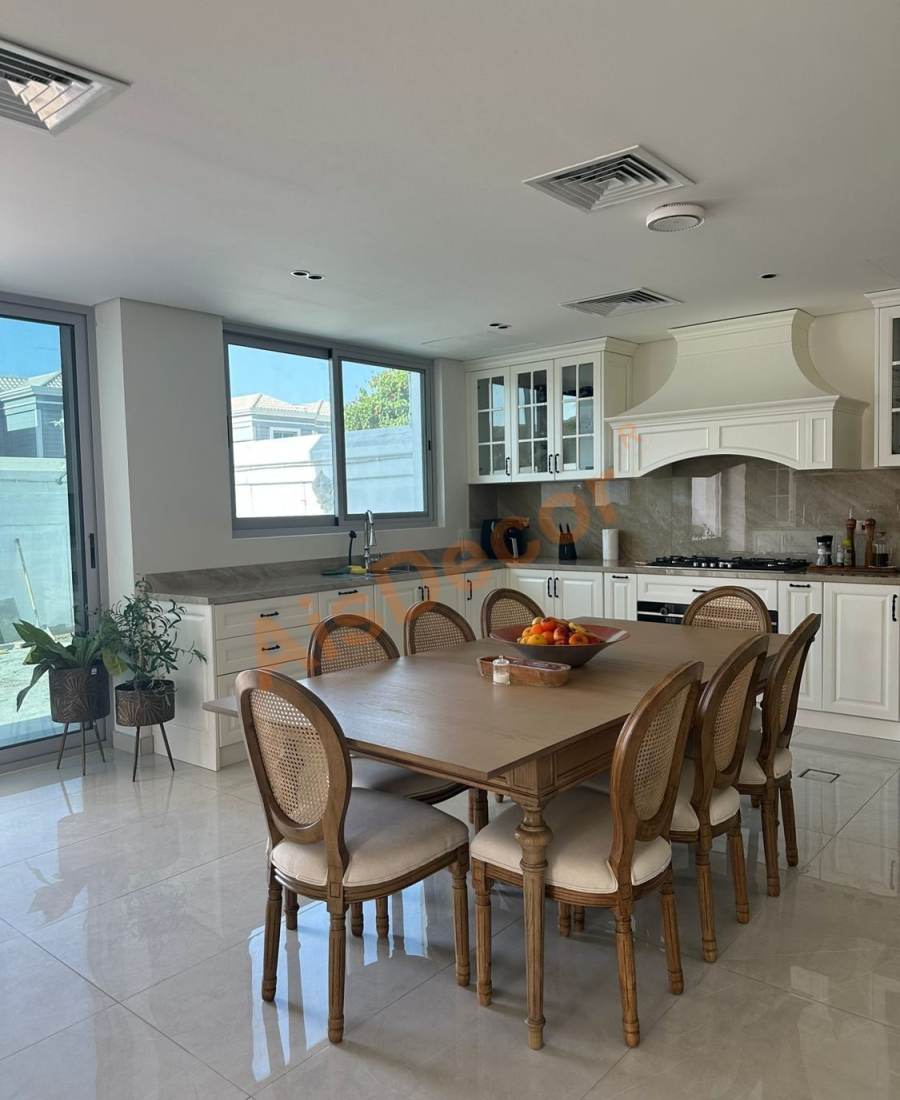
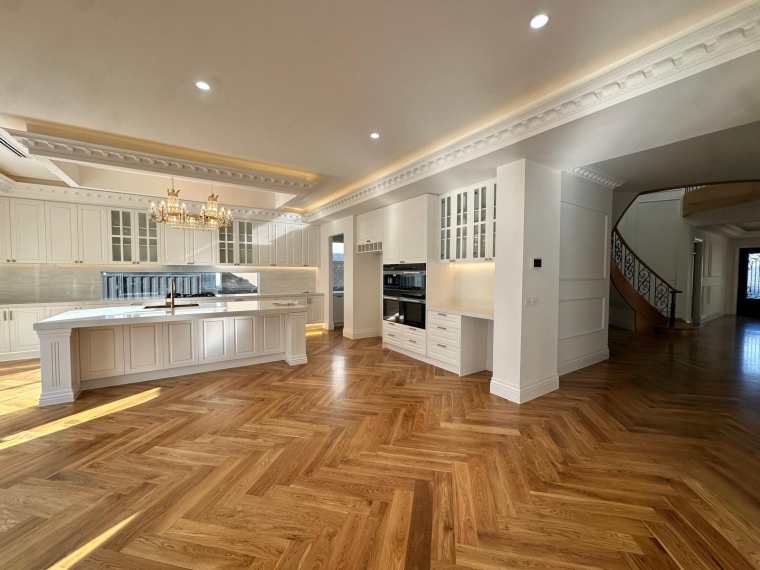
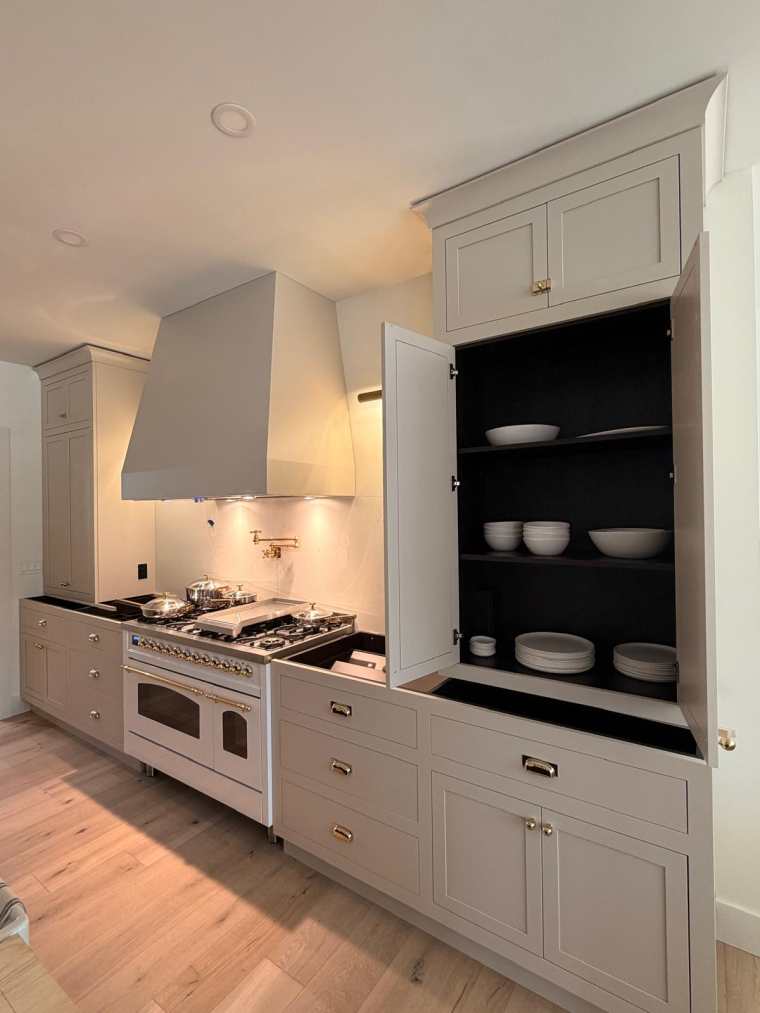
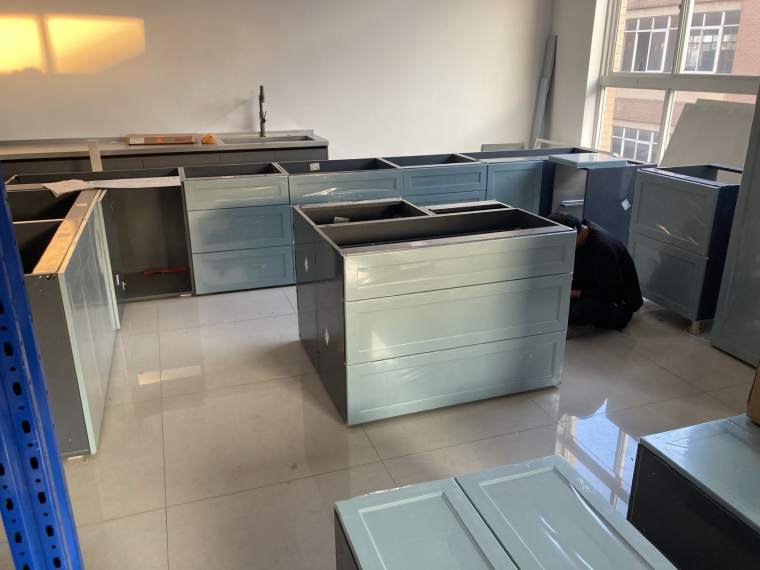
ZoneIdeal has completed a whole-house cabinetry package for a private residence in Florida, United States. Before any carton was sealed, every cabinet run was assembled in the factory, checked against the approved shop drawings, and its integrated LED lighting switched on and tested. Photographs taken in the assembly bay document the sequence: carcasses squared, doors hung, drawers fitted, lighting energised, parts labelled, then packed in exactly that state: each cabinet as a complete unit, most filler and decorative panels in their own cartons.
What "100% pre-assembly" actually means
It means each unit is built as it will stand on site, in the same order, using the same hardware, before it is ever packed. The carcass is assembled and squared, doors are hung and their reveals checked, drawers are run in and out, and the lighting circuit is connected and switched on. The protocol is identical whether the unit is a set of custom kitchen cabinets or a wardrobe run: the test is the assembly, not the drawing. Only then is the unit measured against the drawing, labelled part by part, and packed as it stands. Nothing is dismantled for packing: the condition photographed is the condition that ships.
The difference from a parts-only check is measurable in what it catches. A panel can be cut to the right size, edged correctly and still be wrong: a 2 mm cumulative error across five connected cabinets only appears when the fifth one is offered up to the fourth. Pre-assembly finds that error in a factory bay where a fitter can correct it the same day, instead of on a finished wall in Florida where the correction becomes a site visit, a re-order and a delay to the following trades.
The five gates a unit passes before packing
Carcass assembly and squaring
Panels are joined, the box is squared and diagonal measurements are taken before anything is fixed to it.
Door and drawer fit
Hinges, runners and drawer boxes are installed and operated, with reveals and alignment checked on the assembled unit.
Lighting and hardware test
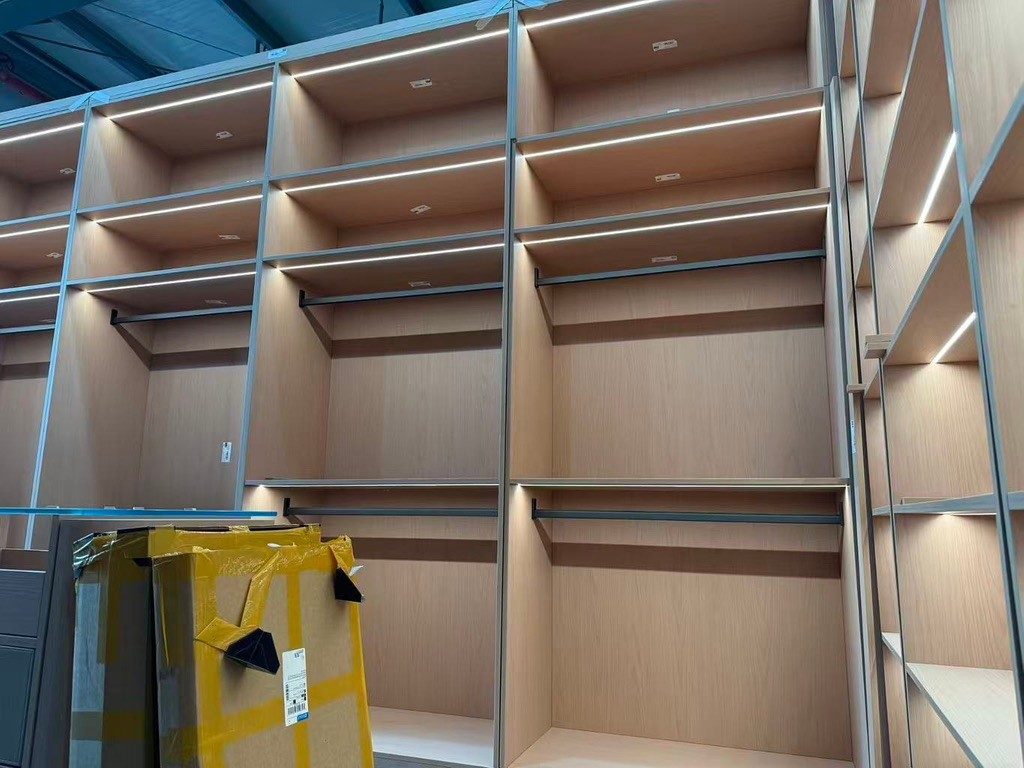
LED strips, switches and the internal wiring are installed and run; every shelf light is verified in place, not sampled.
Dimensional verification
The assembled unit is measured against the approved 2D shop drawings, including filler widths and service clearances.
Labelling and packing
The unit is packed as it passed: carcass, doors, drawer boxes and LED strips in place, one carton per unit. Filler and decorative panels are mostly packed separately, each with a position label keyed to the installation drawing.
What leaves the factory, and what is left for site
The packing list follows the assembly logic rather than a shipping convenience. A unit that has been squared, fitted and tested in the bay is not then taken apart to save volume: it is packed whole, and the parts that must travel separately are the parts that are fitted last.
| Item | How it travels | What the site does with it |
|---|---|---|
| Cabinet unit (carcass, doors, drawer boxes, shelves) | Fully assembled, one carton per unit, packed in the state it was checked | Set in position and fixed; no re-assembly |
| Filler panels and decorative panels | Mostly packed separately, labelled to position | Fitted after the units are set, where they are less exposed to damage |
| LED lighting | Strips fitted, internal wiring run and tested; drivers travel in the hardware box and are fitted on site; runs that cannot be closed in the factory left with labelled terminations | Fit the drivers from the hardware box, connect, and close the runs noted on the drawing |
One caveat belongs in the record rather than in a footnote: not every lighting run can be completed before packing. A link that only exists once two units are set side by side cannot be made in a factory bay, and closing it early would mean packing a cable that has nowhere to go. Those runs are left open, labelled, and listed on the drawing so the installer knows exactly which joint remains.
LED wiring: what the factory closes, and what stays open
Integrated LED cabinet lighting is the component most likely to fail silently in transit. A connector can work loose, or one section of strip can be dead on arrival, and none of that is visible in a sealed carton. On site, the electrician who finds it is already under programme pressure, and access usually means removing shelves or opening a sealed back panel.
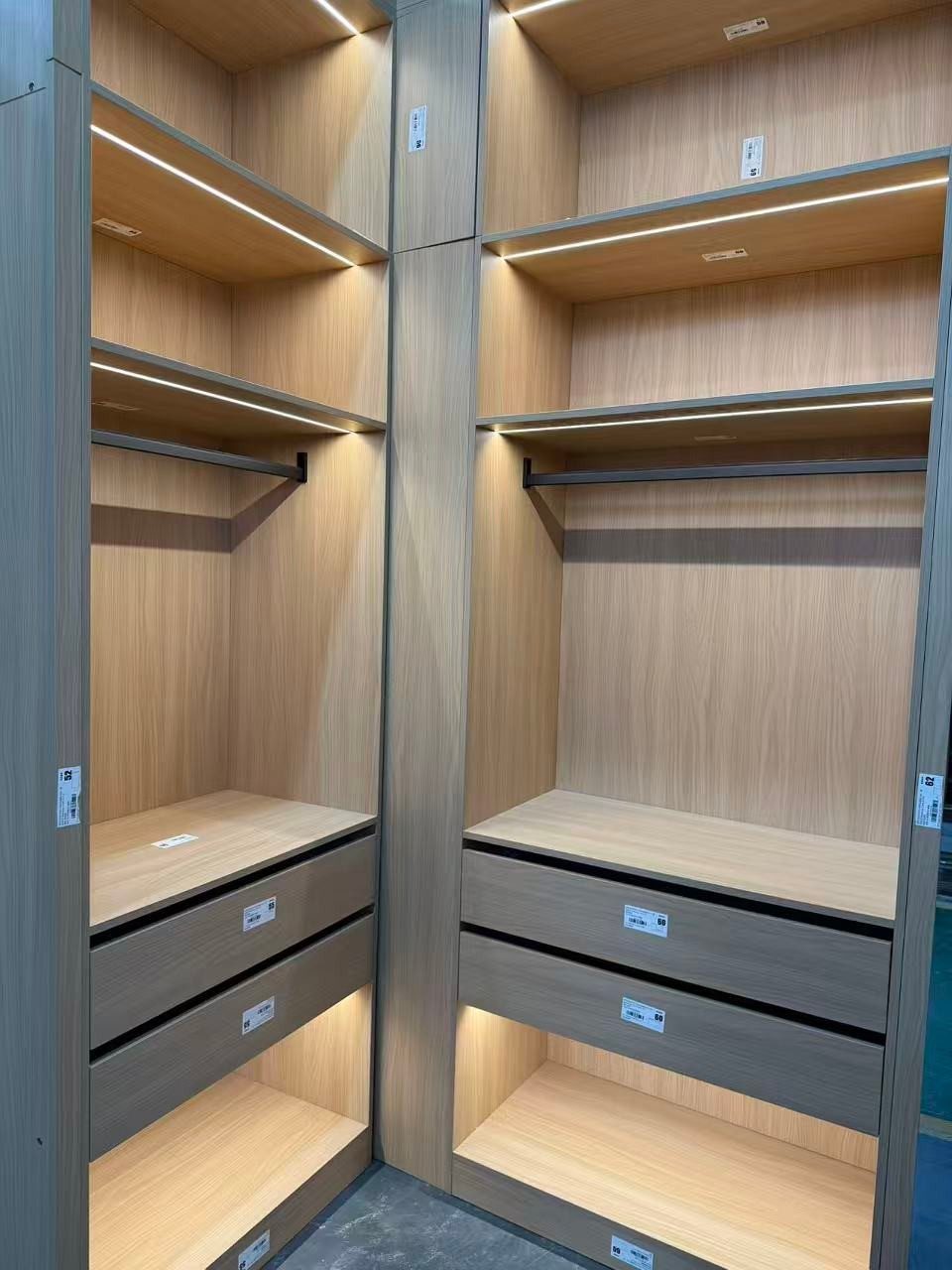
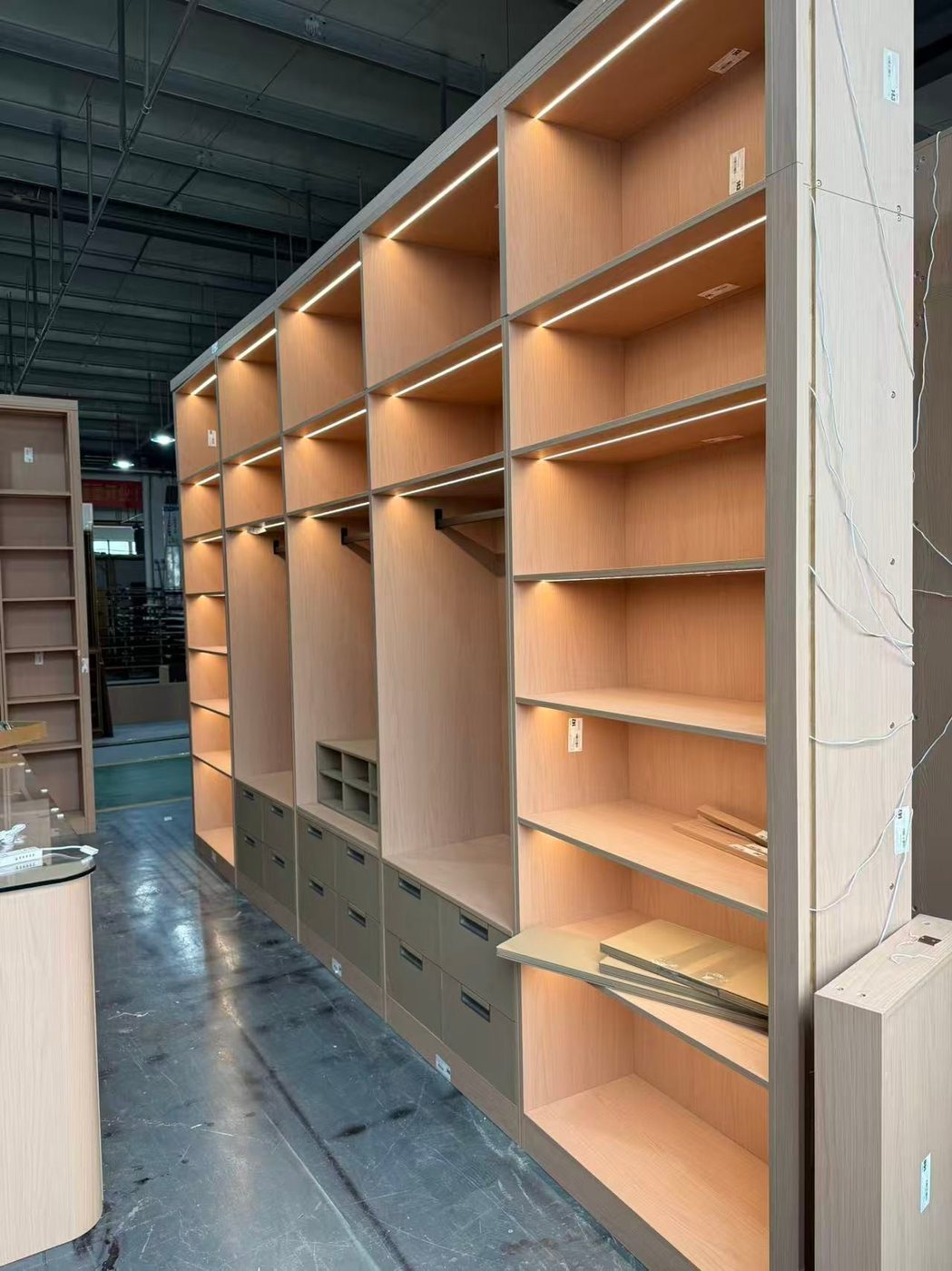
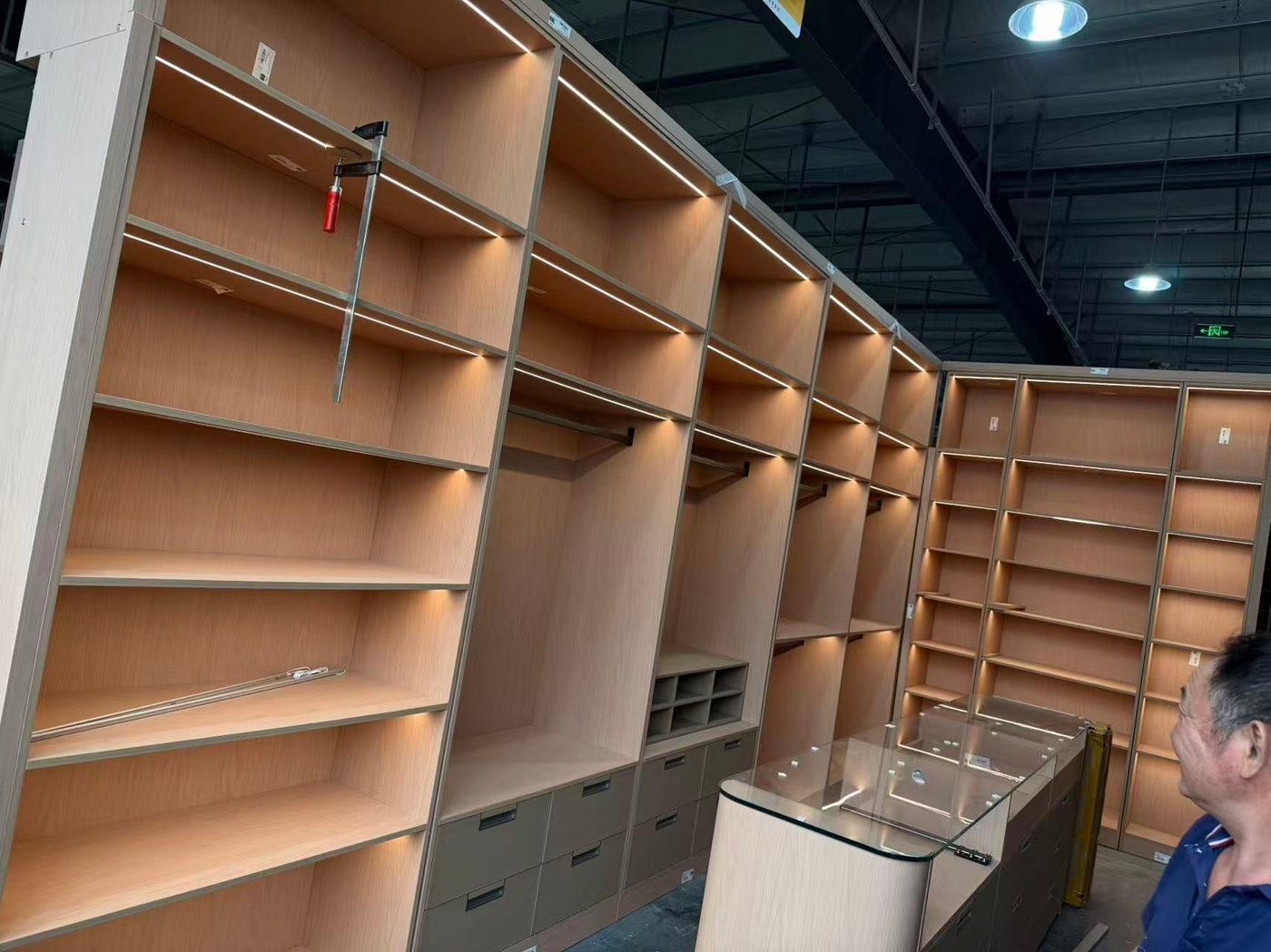
So the lighting is not shipped as a box of parts. Strips are fixed to the shelves, the internal wiring is loomed and terminated, and every run that can be closed inside the unit is closed and switched on while the unit is still open and accessible: each lit shelf checked for even output, the switch or sensor cycled, the terminations proved. One thing stays open by design: a run that only exists once two units meet is left labelled rather than half-finished and hidden. Drivers travel in the hardware box and are fitted on site. The photographs below show completed runs lit in the assembly bay, with the wiring dressed and left in place.
Why the extra step pays: the arithmetic of avoidable error
The Get It Right Initiative, a UK construction research body, estimates the measured direct cost of avoidable error at around 5% of project value across international studies, a figure it notes is above the industry's average profit of about 3%. Including unrecorded process waste, indirect costs and latent defects, total estimates reach 10–25% of project cost.
Avoidable error as a share of project value (GIRI)
Bars scaled to 25% of project value, the upper bound of GIRI's total estimate. Source: Get It Right Initiative, 2019.
Read against a cabinetry package, the arithmetic is simple. A mis-drilled panel caught in the assembly bay costs one panel and one hour. The same panel discovered on site in Florida costs a replacement, air freight for a single component, a return visit from the installer, and the knock-on delay to countertop templating or wardrobe commissioning. Pre-assembly does not eliminate error; it moves the cost of finding it to the cheapest possible point. It also takes work off the site programme: a shelf, a hinge or a door that is already fitted and tested cannot be fitted twice, and cannot be fitted wrongly.
Labelling: the detail that makes a 10,000 km installation predictable
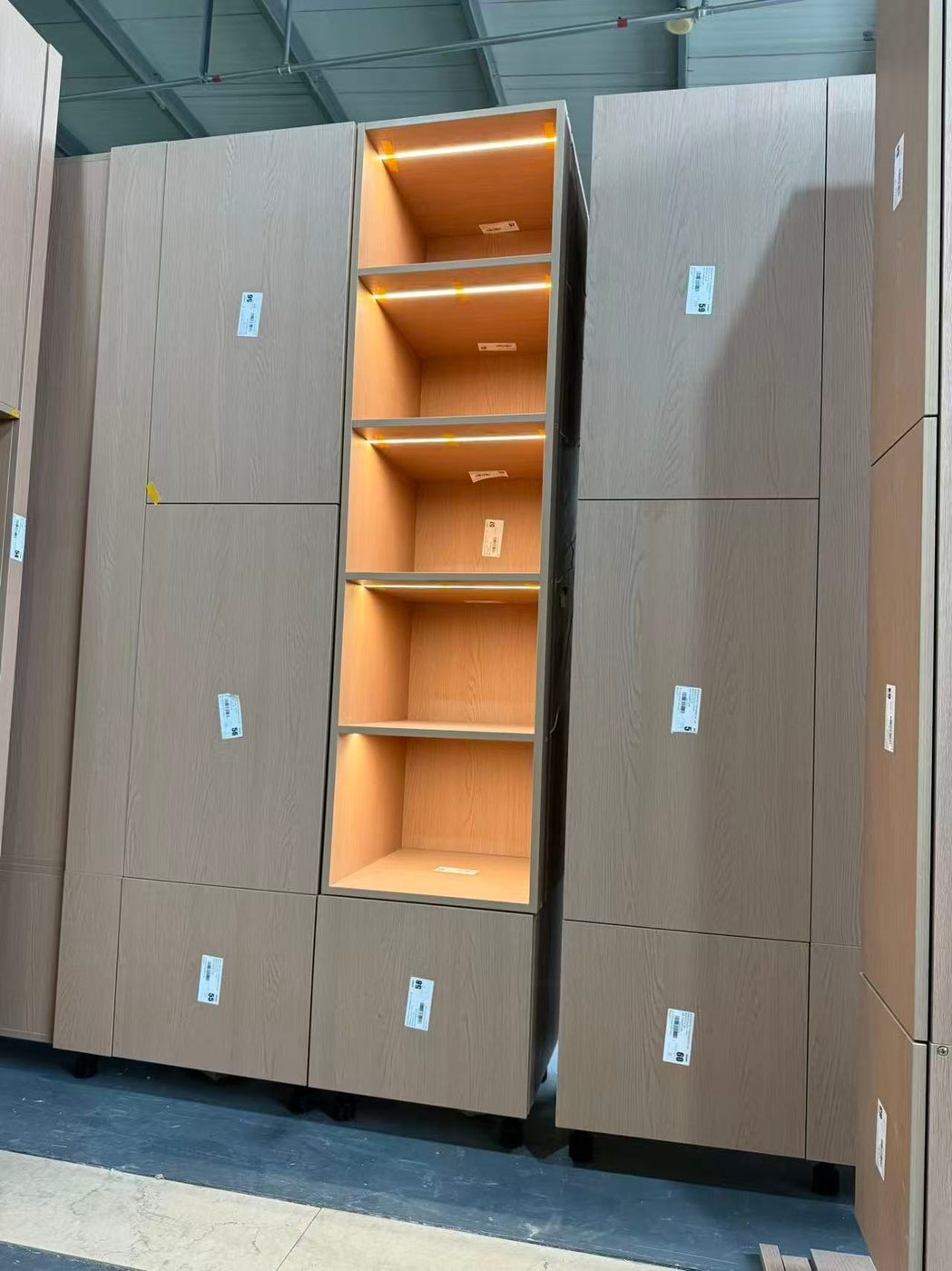
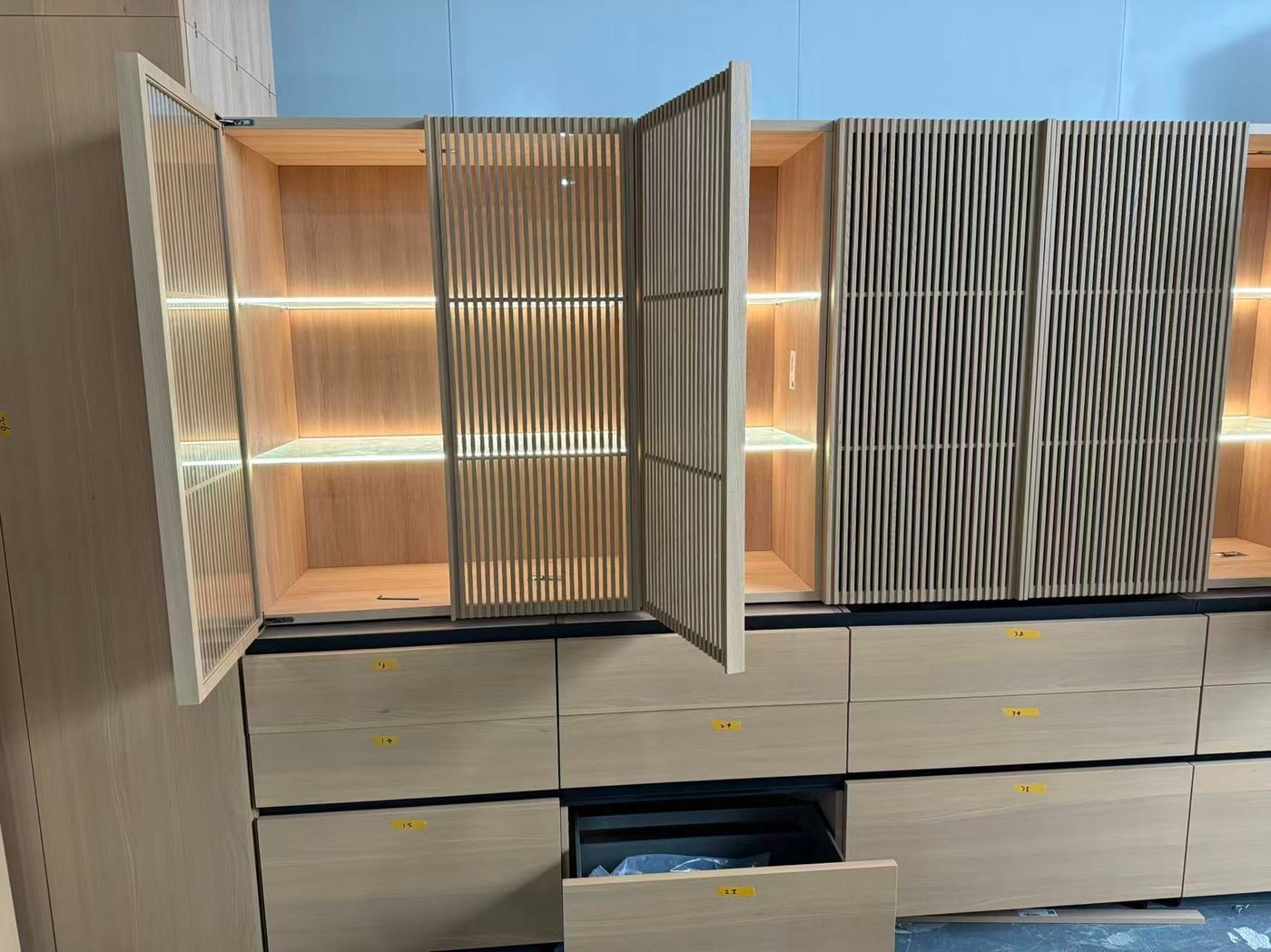
A unit that arrives assembled still arrives with loose components: filler panels, decorative panels, trims, shelf packs, hardware bags, the pieces that are fitted last or cannot travel fixed. The label on each is what turns a crate of parts into an installation sequence, and it is applied during assembly, when the identity of the part is unambiguous and the person holding it knows exactly where it goes. It is the difference between a fitter reading a drawing on site and a fitter matching a number to a position.
The same logic governs how a buyer should write the specification. Rather than asking for "pre-shipment inspection" as a line item, name the evidence the package must produce: an assembly photograph per elevation, a lighting test record per circuit, a dimension check against the approved drawings, and a packing list that matches the label scheme. Those four documents are what a project manager can actually audit from another continent.
What this project record shows, and what it does not
This article reports the pre-shipment process and the packing logic for one completed project. It does not publish the contract value, the unit count, the production lead time or a dated programme, and it is not an independent audit of the installation. The external figures cited describe their own scope: the GIRI estimate covers avoidable error across construction projects generally, not cabinetry specifically. Where the record relies on ZoneIdeal's own photographs and product documentation, that is stated in the caption.
Global demand is growing faster than quality control capacity
Research and Markets values the global kitchen cabinets market at US$83.57 billion in 2024 and projects US$137.75 billion by 2033, a compound annual growth rate of 5.71% for 2025–2033, driven by residential construction, renovation activity and demand for customised designs, with material cost volatility named as a principal risk. Growth of that order increases the number of packages crossing borders; it does not increase the number of people checking them. A custom cabinetry supplier competing for US and Australian project work is ultimately competing on the evidence it can produce before the container sails.
Request the QC checklist or a project quote
If you are specifying whole-house cabinetry for a US or Australian project and want the pre-shipment protocol written into the order, send your floor plans, elevations and finish schedule to the project team. ZoneIdeal quotes custom kitchen cabinets, walk-in closet systems and full-house joinery for builders, developers, distributors and design studios, and can document the assembly and lighting test for each package on request.